
The prevailing culture around modern fitness often glorifies physical punishment. Popular workouts celebrate bone-jarring plyometrics, relentless sprinting on pavement, and grinding through joint discomfort as though pain were proof of progress. Somewhere along the way, aching knees and inflamed lower backs became accepted as the collateral damage of staying in shape. Yet orthopedic wear and tear is never a prerequisite for strength, cardiovascular endurance, or metabolic health. In reality, subjecting your joints to constant microtrauma is one of the quickest ways to derail consistency and sideline your training long-term.
Low-impact exercise offers a sustainable alternative that prioritizes longevity without sacrificing performance. By eliminating harsh collisions with hard surfaces while maintaining high muscular and cardiovascular demands, you can develop real athletic capacity without wearing down your cartilage. Whether you are managing joint hypermobility, recovering from past orthopedic injuries, navigating osteoarthritis, or simply looking to protect your connective tissues for decades to come, joint-friendly movement represents a smarter, more durable approach to lifelong fitness.
Understanding the Difference Between Impact and Intensity
A common misconception keeps many athletes and active adults tethered to punishing routines: the belief that low impact inherently means easy. In exercise biomechanics, impact and intensity describe two completely different physiological realities.
Impact measures the mechanical shock generated when your body collides with an external surface. Every time a running foot strikes asphalt, a ground reaction force equal to two to three times your body weight radiates upward through the foot, ankle, knee, hip, and lumbar spine. Over thousands of strides, that repetitive force compresses spinal discs, degrades articular cartilage, and inflames surrounding tendons.
Intensity, by contrast, measures your cardiovascular output, muscular recruitment, and overall metabolic expenditure. A hard interval session on an indoor bike or a sustained circuit on a rowing machine can drive your heart rate near its maximum, trigger deep muscular fatigue, and boost your VO2 max just as effectively as a track workout. The critical difference is that the mechanical shock load remains negligible. By decoupling intensity from impact, you can work hard enough to spark meaningful physical adaptations while sparing your joints the blunt force of gravity.
High-Yield Cardiovascular Options for Happy Joints
Cardiovascular training does not require high-impact foot strikes. The goal is to elevate blood flow, strengthen the heart muscle, and enhance mitochondrial density. Several low-impact modalities achieve this with exceptional efficiency.
Cycling for Controlled Power
Riding a bicycle, whether on quiet outdoor roads or a stationary studio bike, provides an ideal closed-kinetic-chain environment. Because your feet remain firmly planted on the pedals throughout the entire range of motion, there are no sudden landing forces to compress your knees or hips.
Cycling allows you to precisely modulate resistance and cadence to target different energy systems. A high-cadence, moderate-resistance session promotes aerobic base development and circulates synovial fluid—the natural lubricant of your joints—through the knee capsules. For those with preexisting knee concerns, dialing in proper saddle height is essential: your knee should retain a slight bend of roughly twenty-five to thirty degrees at the bottom of the pedal stroke to avoid anterior patellar compression or posterior hamstring strain.
Swimming and Water Aerobics
Water is the ultimate training medium for joint preservation because buoyancy actively unloads gravitational stress. When submerged to chest depth, your joints bear only a fraction of your normal body weight. This dramatic reduction in load allows individuals with severe joint sensitivity or chronic back discomfort to move through full ranges of motion that would be excruciating on land.
Water also creates accommodating resistance in every plane of motion. The harder you push against water, the more resistance it provides, challenging opposing muscle groups simultaneously during every stroke or kick. Swimming laps targets upper-body pulling strength and core stability, while shallow-water jogging and aquatic resistance drills offer robust cardiovascular training without a single sharp impact.
Incline Walking and Rucking
Walking on flat pavement is gentle, but it can sometimes lack the cardiovascular intensity required to push conditioned individuals. Introducing a modest incline immediately alters that dynamic without increasing joint shock.
Walking uphill on a treadmill or a gradual outdoor grade shifts the mechanical workload away from your knee joints and directly into your posterior chain—the glutes, hamstrings, and calves. The incline naturally shortens your stride, reduces heel-strike velocity, and minimizes shear forces across the patellofemoral joint. For an added cardiovascular and bone-density stimulus, wearing a lightly weighted vest or backpack—often called rucking—increases the muscular and metabolic load while keeping movement speeds slow and controlled.
Resistance Training Built Around Joint Mechanics
Cardiovascular conditioning is only half the equation; preserving lean muscle tissue and bone mineral density requires regular resistance training. Fortunately, strength training does not require heavy spinal loading or explosive barbell movements to be effective.
Cable Systems and Resistance Bands
Free weights apply gravity-dependent resistance that peaks at specific angles, which can sometimes place disproportionate leverage on vulnerable joints. Cable machines and high-quality elastic resistance bands provide a continuous, smooth tension curve throughout the entire repetition.
Because resistance bands increase in tension as they stretch, they match the body’s natural strength curve: the load is lightest at the beginning of the movement when your joint is in its most mechanically vulnerable position, and heaviest at full contraction where your muscles have superior leverage. This fluid resistance pattern builds shoulder and hip stability without jarring delicate connective tissues.
Controlled Eccentrics and Isometric Holds
You do not need to lift massive external loads to stimulate muscle hypertrophy. Altering the tempo of your repetitions can generate high muscular tension using significantly lighter weights.
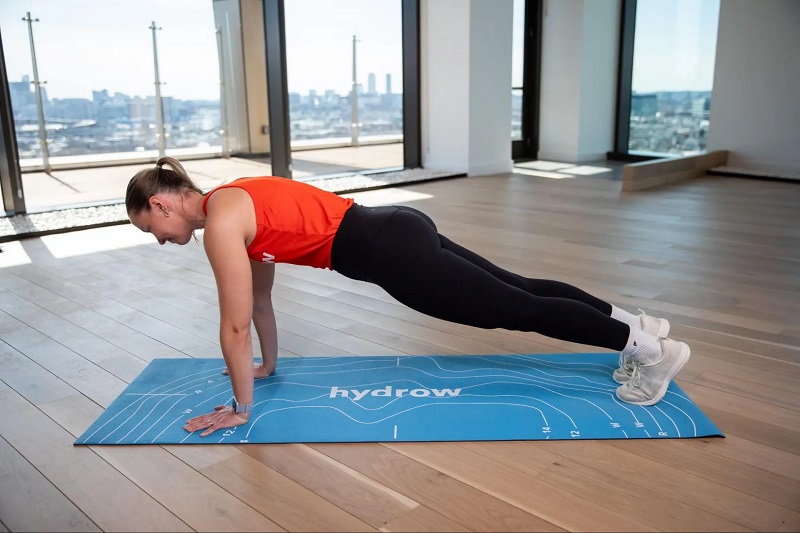
Focusing on the eccentric phase—the slow, lowering portion of a lift—causes substantial muscle fiber recruitment while generating lower peak joint pressure than rapid, bouncing lifts. Similarly, isometric holds, such as wall sits, split-squat pauses, or plank variations, force muscles to produce maximum force against a static position. Isometrics build tendon stiffness and joint stability while completely eliminating repetitive friction inside the joint capsule.
Suspension Training
Suspension straps leverage your own body weight and allow you to micro-adjust joint angles on the fly. If a standard push-up irritates your wrists or shoulders, suspension straps permit your hands to naturally rotate into a neutral grip, aligning the radius, ulna, and humerus in a biomechanically comfortable track.
Suspension trainers also allow you to offload lower-body movements. By holding the handles during squats, lunges, or single-leg balance exercises, you can distribute a portion of your weight through your upper body, allowing your hips and knees to move through a full, healthy depth without absorbing the entire load.
Structural Balance: Rowing and Mat-Based Mobility
Complete fitness requires movement through multiple planes alongside structural core stability. Neglecting these areas often leads to muscle imbalances that force joints to absorb unnatural torque.
Ergometer rowing is one of the most comprehensive full-body cardiovascular and strength exercises available, engaging roughly eighty-five percent of the body’s musculature across every single stroke. The fluid sequence of the drive phase—pushing with the legs, swinging through the hips, and finishing with the upper back and arms—builds tremendous posterior chain power without any impact. Because the feet are strapped in and the seat glides along a flat monorail, your lower body generates high wattage purely through smooth hip extension.
Complementing rowing with mat-based disciplines like Pilates reinforces the deep stabilizing muscles that protect your joints from the inside out. Pilates focuses heavily on pelvic alignment, diaphragmatic breathing, and the recruitment of the transverse abdominis and multifidus. These deep trunk muscles act as an internal corset, stabilizing the spine and pelvis so that larger prime mover muscles can function without placing torque on the lower back and sacroiliac joints.
Structuring a Sustainable Routine
Transitioning to low-impact fitness is not about settling for less; it is about choosing sustainable performance over short-term exhaustion. A well-rounded weekly routine might blend two days of steady-state cycling or swimming, two days of controlled, band- and cable-based resistance work, and a dedicated session of rowing intervals combined with mat mobility.
Pay close attention to internal biofeedback as you train. Muscle fatigue, elevated breathing, and a healthy post-workout glow indicate productive training. Deep, pinpointed aches inside a joint capsule, lingering stiffness that persists for days, or sharp twinges during movement are clear warnings that a pattern needs adjustment. By prioritizing smooth mechanics and respecting your structural anatomy, you can build impressive physical endurance and functional strength that serve you reliably for a lifetime.
